
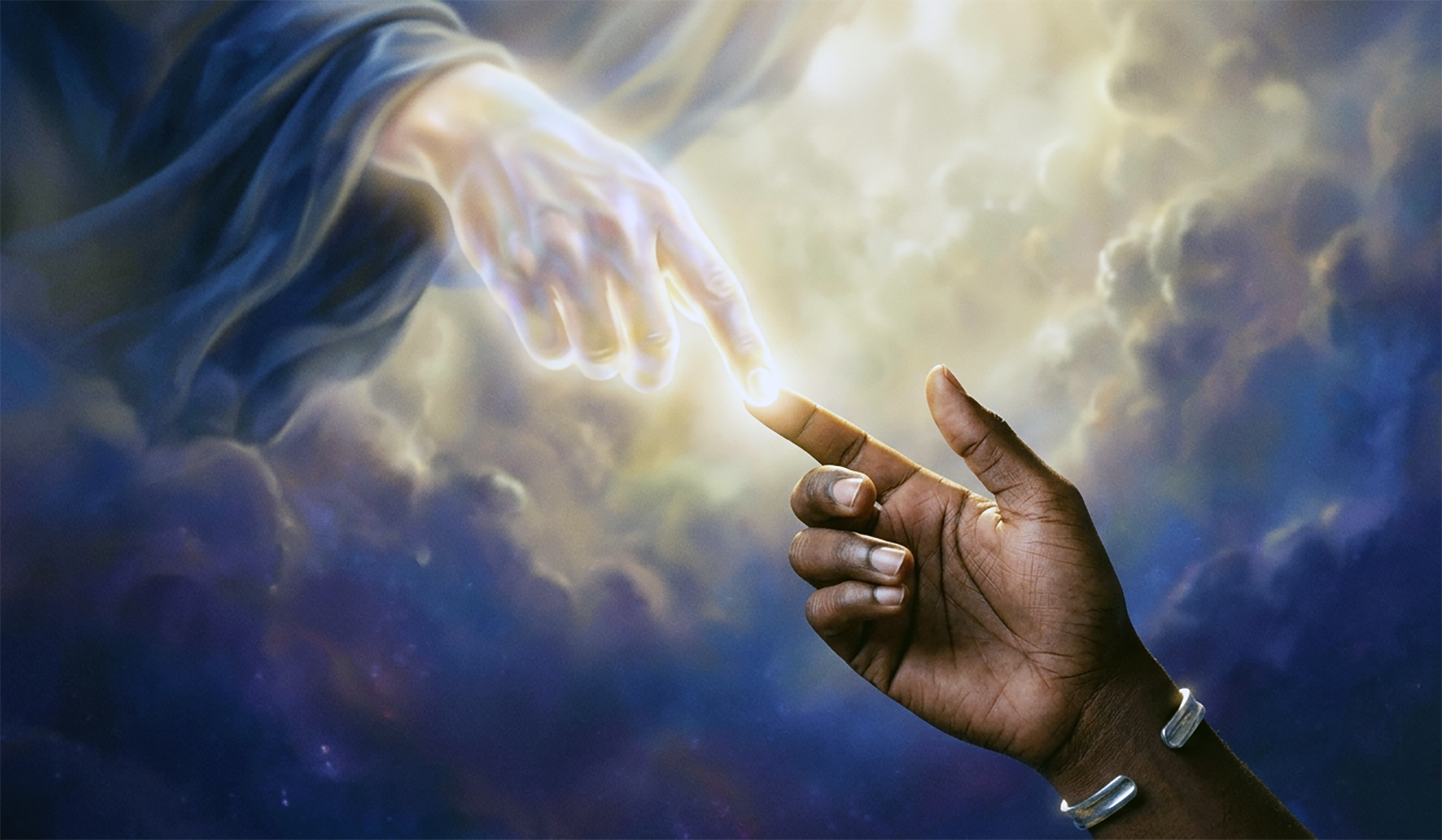
Heavenly

June 16, 2026
“Just as we have borne the likeness of the earthly man, so also shall we bear the likeness of the heavenly man.” – 1 Corinthians 15:59
There is a moment in the book of Acts, almost easy to overlook, that carries a weight the early church could not have fully understood at the time.
In Antioch, the great cosmopolitan city where Jew and Gentile sat at the same table and the gospel moved without the old borders, the surrounding population gave the disciples a name: Christians.
They were not called this by the apostles or fellow believers.
They were not given this title in a church council. The watching world coined it because it could not escape one unavoidable observation — these people looked like Christ.
Their speech, their generosity, their inexplicable peace under pressure, their willingness to lay down social advantage for the sake of others: it all pointed to one person.
The name was almost an accusation. Those people are like Him. And the church, rightly understood, should have received it as the highest compliment it would ever be paid.
That moment in Antioch was not an accident of culture or community; rather,
It was the visible fruit of a theological reality planted at the resurrection and tended by the Holy Spirit in every believer since.
Asserting that we “bear the likeness of the heavenly man” is not wishful language. It is covenantal declaration.
And to grasp what is being promised, we must first reckon honestly with what we have inherited.
Adam’s legacy is not ancient history. It is the condition we wake up in every morning.
It means letting the resurrection — not anxiety, not ambition, not the long shadow of Adam — to determine what we do next.
Because of one man’s disobedience, Paul writes in Romans 5, sin entered the world and death through sin, and so death spread to all people.
We bear Adam’s image in our bodies, which decay; in our instincts, which bend toward self-preservation before sacrifice; in our groaning, which Romans 8 describes as the whole creation’s shared labor pain awaiting redemption.
The earthly man’s likeness is not merely a theological abstraction; it is the ache in aging joints, the smooth skin giving way to wrinkles, the shame after moral failure, the inexplicable pull toward what we know will diminish us.
Ephesians 2 names it plainly: we lived according to the passions of the flesh, children of wrath by nature.
Adam’s fall introduced a legacy of frailty and death, and every human being, untouched by grace, carries that portrait.
But the resurrection of Jesus Christ is God’s formal declaration that the earthly does not have the final word.
Jesus, the ‘last Adam,’ did not merely reform Adam’s nature; He replaced it.
He came from heaven, not from dust. He lived without sin’s corruption, died without sin’s guilt, and rose in a body no longer subject to decay.
Paul calls Him the ‘firstfruits’ in 1 Corinthians 15:20, which means his resurrection is not an isolated miracle; rather, it is the beginning of a harvest. Every believer is the massive crop that follows.
Our identity is no longer tethered to what Adam lost; it is secured in what Christ accomplished and what He is preparing us to become through the Holy Spirit. As John writes with stunning economy: when He appears, we shall be like Him.
This is a present commission, not a mere distant consolation.
The residents of Antioch did not see a future hope in those disciples.
What they saw was a current reality reshaping human behavior.
To bear Christ’s likeness today means reflecting the image of Christ in everything we do in our various spheres of influence.
It means letting the resurrection — not anxiety, not ambition, not the long shadow of Adam — to determine what we do next.
The Church is most herself when the world outside cannot help but reach for a name that glorifies Christ..