
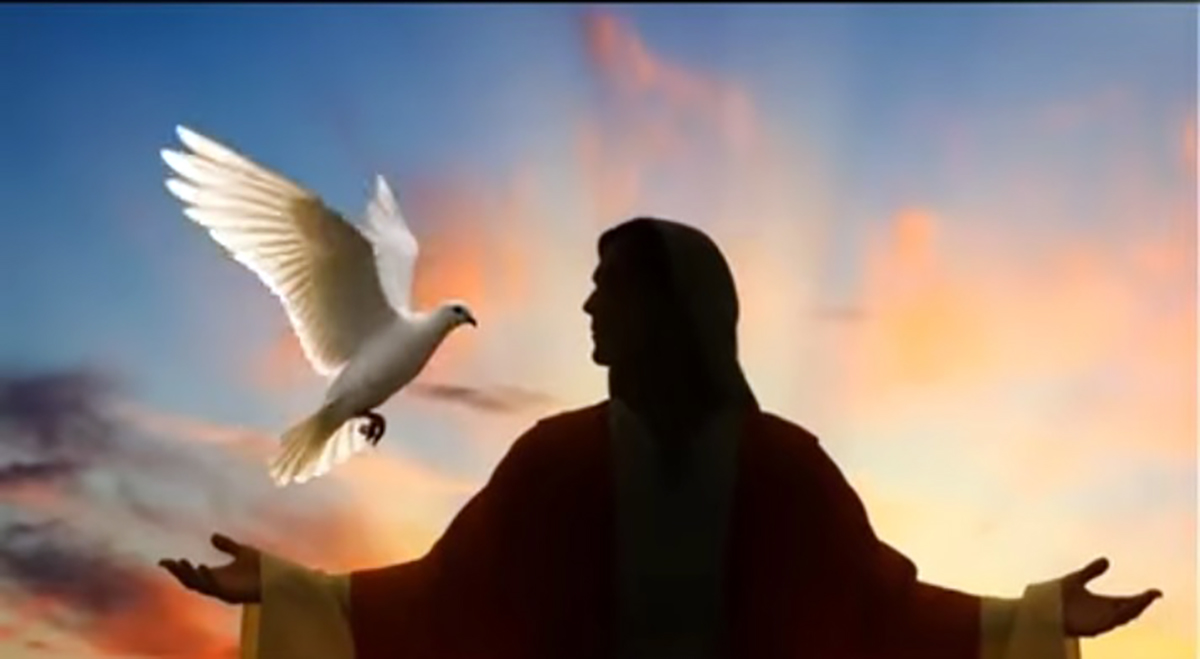
Christ

March 27, 2026
“And demons also came out of many, crying out and saying, “You are the Christ, the Son of God!” And He, rebuking them, did not allow them to speak, for they knew that He was the Christ.” – Luke 4:41
Throughout the generations, there is no person whose identity has evoked more debate and controversy than Jesus.
Even those looking at Him face to face were in confusion about who He truly was.
However, the spiritual world had no doubts.
Our text today declares: “And demons also came out of many, crying out and saying, ‘You are the Christ, the Son of God!’”
Think about that. The enemies of God — those who rebelled against His throne — recognise Jesus for who He truly is, even before many of His friends do.
Yet, Jesus silences them. He does not need their testimony, and neither do we.
The question Luke presses upon us is not whether Jesus is the Messiah.
Even hell concedes that. The question is whether you will.
Demons are not confused about Jesus.
Scripture reveals they are fallen angels (2 Peter 2:4; Jude 6), spiritual beings who once beheld the glory of the eternal Son before their rebellion (Job 38:7; John 17:5).
Unlike people, their perception is not clouded by doubt or dulled by the distractions of earthly life.
When the eternal Logos stepped into human flesh (John 1:14), they recognised Him instantly — not as a mere teacher or prophet, but as the Christ, the Anointed One, the Messiah, the Son of God.
Their confession is not flattery; it is terror.
The title Christ — from the Greek Christos (Hebrew – Messiah) — means “Anointed One.”
It is the title that echoes through every promise and prophecy of the Old Testament, from Isaiah’s suffering servant to Daniel’s anointed prince.
When the demons cry out in Luke 4, they are — against their will — completing a prophetic sentence God began centuries before.
The darkness knows its Master; shall not the children of light know Him all the more?
There is another scene, this time in Matthew 16, that mirrors this moment but with tenderness and hope.
Jesus asks His disciples, “Who do you say I am?” The crowds had their guesses — John the Baptist, Elijah, Jeremiah — each a human attempt to explain the extraordinary.
But Peter steps forward: “You are the Messiah, the Son of the living God.”
Jesus’ reply is striking: “Blessed are you, Simon son of Jonah, for flesh and blood has not revealed this to you, but my Father in heaven.”
Peter did not reason his way to this confession.
He did not arrive at it through logic or hearsay.
It was a gift — a revelation from God Himself.
This is the heart of the Gospel: the recognition of Jesus as the Christ is not a human achievement.
It is a divine unveiling.
You cannot think your way into knowing who Jesus is; you must be shown.
The demons confess Christ with trembling.
Peter confesses Christ with wonder.
And today, the same Lord stands before you — not shrieking, not demanding, but inviting.
The universe has already settled the question of His identity.
The heavenly hosts proclaim it.
Even the fallen powers admit it.
It is possible, you see, to have information without transformation — to know He is King and yet remain in rebellion.
The day is coming when every knee shall bow and every tongue — willing or not — shall confess what the demons already know (Philippians 2:10–11).
But there is a world of difference between a forced confession and a freed one.
Do not wait for human approval to believe.
Do not rely on fleshly reasoning to find Him.
The darkness knows its Master; shall not the children of light know Him all the more?
He is the Christ.
The Son of the living God.
And that, beloved, is not something you figure out.
It is something you receive.
Believe. Repent. Live.